Parents, educators, and carers invest their days juggling risk. A fall from a climbing up framework, a nut concealed in a biscuit, a young child who stops breathing during a high temperature. Many occurrences are small, however when they are not, the initial couple of minutes form everything that follows.
That is where an express child care first aid course earns its place. It gives you focused, useful abilities in a short, concentrated block of time, so you can act fast and act well.
I have educated hundreds of very early years team, sports instructors, and moms and dads in first aid and CPR. Numerous arrive sensation time inadequate, nervous about emergencies, and concerned they will fail to remember technical information. They leave amazed by just how much they can do with a few vital habits and a straightforward psychological checklist.
This guide discusses exactly how express childcare first aid training functions, what it ought to cover, exactly how to select a fast first aid course that is still reputable, and how to maintain your abilities sharp once you have your first aid certificate.
Why speed matters so much with children
Children's bodies make up impressively for some time, then can deteriorate very promptly. That pattern is various from grownups, and it shapes how we make first aid and CPR training for childcare.
In method, this indicates 3 things.
First, breathing problems prevail and high threat. Choking on food, asthma attacks, croup, or serious allergic reactions frequently intensify much faster than in adults. You may have only a minute or more to get rid of a respiratory tract or start CPR prior to the circumstance becomes critical.
Second, injuries and ailments can look light at first. A head bump in the playground, a sleepy toddler with a fever, or a "little" shed from warm tea can degrade over the next minutes or hours. Child care first aid is as much regarding detecting the very early threat indications as it has to do with doing chest compressions.
Third, adults around the kid are commonly mentally included. Parents, grandparents, or colleagues may panic or ice up. Somebody needs to enter that emotional tornado with calm, clear activity. A great express first aid course for childcare does not just teach methods. It trains you to handle those very first disorderly moments.
When people search for a "fast first aid course near me", they are usually handling job and family. Yet hidden in that search is an extremely sensible demand: instruct me what I really require, quickly, without fluff. That is exactly what a well developed express child care first aid course ought to do.
What "express" truly implies in first aid training
Express, in this context, describes the layout, not a faster way with the fundamentals. You still need to cover first aid and CPR thoroughly enough to respond to real emergencies.
Most express first aid courses and express child care first aid training programs reduce the class time in one of 3 ways:
Concentrated schedule. As opposed to spreading training over a number of nights, you finish the course in a solitary lengthy session or more compact fifty percent days.
Blended distribution. Part of the theory is relocated online as self-paced modules. You review video clips and case studies in your home, then participate in a much shorter useful session where you practice CPR, choking feedbacks, and various other hands-on skills.
Focused material. The course stays tightly on the circumstances you are more than likely to encounter in childcare, instead of broad workplace threats that do not use around children.
The risk with "fast first aid" or "express first aid" is when companies just removed technique time to make the timetable appearance eye-catching. Abilities like CPR or handling choking in babies are extremely physical. You can not learn them appropriately from slides alone, despite just how well developed. There requires to be sufficient time to practice, be dealt with, and go through circumstances until your actions feel virtually automatic.
When you consider express childcare first aid courses, look not only at the complete hours, yet at exactly how those hours are used.
Core abilities every express child care first aid course ought to cover
Content names differ in between areas and recognizing bodies. Some call it paediatric first aid, others "childcare first aid and CPR course", or "FAP first aid" if linked to certain frameworks. Tags aside, an effective express childcare first aid course for individuals who work with children generally covers the exact same core areas.
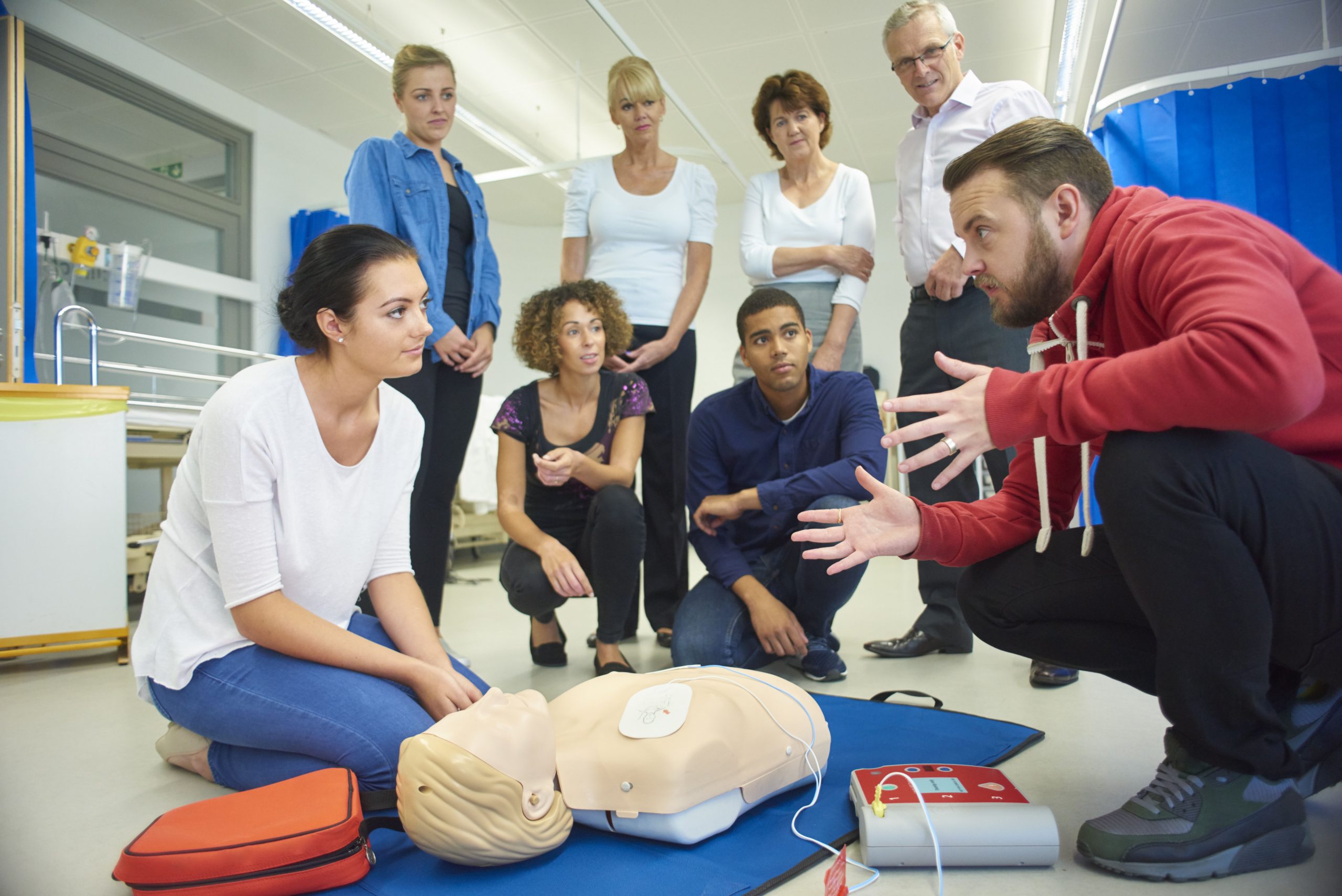

CPR for babies and children
CPR training is the heart of any type of major first aid course. For childcare, you need certain skills for various ages, not just "generic" grown-up CPR.
Participants ought to exercise:
- Correct hand and finger settings for infant and youngster compressions Compression depth and rate for each age group When and exactly how to give rescue breaths securely How to make use of an AED on a youngster, including pad positioning and safety and security checks
Many express cpr courses or fast cpr courses deliver this in an extremely condensed style. There is nothing wrong with a fast cpr correspondence course if you already have a solid base, however, for a very first time student, you still require sufficient repeating on the manikin that your muscles keep in mind the rhythm.
I usually see people begin compressions as well carefully on the infant manikin since they hesitate of "breaking" something. Throughout training we deal with that reaction and connect it to actual cardiac arrest end results, so they recognize why company, fast compressions matter.
Choking and airway emergencies
If I had to select just one topic for a short express cpr course aimed at child care, choking would certainly be it. It prevails, high risk, and really conscious just how rapidly you intervene.
A good express childcare first aid course ought to offer you:
- Clear aesthetic instances of partial vs complete air passage obstruction Step by step method for back blows and breast embed infants Abdominal thrusts for youngsters when ideal Positioning tips for different body sizes
Scenario practice helps here. For example, a 3 years of age that runs with food, chokes, after that panics and conceals behind furnishings. Or an infant strapped into a highchair who starts to cough and transform color. Those little sensible details - where your hands really go, exactly how to sustain the head, what to say to the child - stick much better than abstract diagrams.
Breathing problems and allergies
Asthma and anaphylaxis are significantly typical in childcare settings. Staff and parents have to recognize how to recognise very early indicators and act prior to a full collapse.
Express first aid courses with a childcare emphasis typically consist of:
- Use of inhalers and spacers for bronchial asthma Recognising wheeze, raised work of breathing, and quiet upper body Use of adrenaline auto-injectors (epi-pens and comparable gadgets) Positioning a child who is struggling to take a breath
Here, the judgment phone call is often when to call emergency solutions. Lots of carers fret about "bothering" paramedics. In training we dissect genuine situations to reveal that waiting too lengthy is a much bigger trouble than calling early and afterwards improving.
Bleeding, injuries, and head injuries
Most child care incidents entail drops and reduces. They hardly ever get to headlines, but you handle them weekly, sometimes daily.

Any first aid and cpr training classes for child care require to explore:
- Direct stress and dressings for bleeding When heavy bleeding needs immediate rise Assessing a head injury: red flags vs moderate bumps When to observe and when to ask for medical testimonial
Children might cry noisally, which can misdirect adults concerning severity. A silent, drowsy kid after a head impact worries me greater than a shouting one. That type of subtlety separates a tick-box course from one rooted in genuine practice.
Burns, scalds, and daily mishaps
Hot drinks, radiators, pots, and food preparation tasks all create melt threats. Right here, the More helpful hints first 20 minutes of treatment form the long-term outcome for skin and scarring.
Training should provide you an extremely clear, easy routine: cool the melt appropriately, cover it properly, and avoid natural remedy that trigger injury. It must also check out youngster certain problems, such as tiny bodies losing heat promptly while you cool down a burn, or how to handle a troubled, twitching child around running water.
Beyond burns, express childcare first aid courses usually discuss nosebleeds, small fractures or thought cracks, and eye injuries from sand, playthings, or chemicals.
Illness, high temperature, and seizures
Not every emergency situation entails injury. Numerous child care settings will certainly see febrile health problems, dehydration, and periodic seizures.
A solid express first aid training plan for child care addresses:
- Safe temperature level control and recognising when high temperature is a problem Early signs of severe infection or blood poisoning in a child What to do during and after a seizure When a "stomach insect" or looseness of the bowels comes to be a dehydration danger
You can not detect everything as a first aider, however you can recognise patterns that require urgent medical input. As an example, a generally playful kid that all of a sudden becomes lethargic, breathing quicker, and not responding correctly, also if they have no clear injury.
Can a fast first aid course still be high quality?
Yes, but not every fast first aid course is equal. You must really feel a healthy and balanced skepticism concerning very brief "express first aid courses" that assure full coverage and certification in an unrealistically short time, specifically if they depend mainly on lectures.
High top quality express first aid training normally has 4 features.
The initially is selective content. Instead of attempting to mimic every component of a long course, the supplier prioritises life threatening troubles and the most typical child care emergencies. You get depth where it matters most, instead of shallow coverage of everything.
The second is combined understanding. Pre course online components cover background concept: chain of survival, fundamental makeup, legal elements, and recognition of illness. The face to face session ends up being virtually totally hands-on practice. This is where numerous express first aid courses and express cpr training programs really shine.
The third is solid teacher experience. A trainer with a background in emergency care or real childcare settings can press material intelligently. They know which information genuinely aid under pressure and which can be securely relocated to pre analysis or left out.
The 4th is assessment that really evaluates your abilities. Even in an express first aid course, you ought to expect to show CPR, choking management, and a couple of scenario actions, not simply tick boxes on an on-line quiz.
Fast certification serves, yet only if it shows actual capacity. Do not be afraid to bow out carriers that make it seem like a formality.
Who benefits most from an express child care first aid course
Time efficient training is specifically beneficial for:
- Early years instructors and childcare employees whose rosters make prolonged courses difficult Nannies, au sets, and babysitters in between positionings or working irregular hours Parents or foster carers that need functional first aid and cpr, not company health and safety concept Sports trainers and activity leaders that function mainly with kids and teens
For full time childcare team, your regulator or regional authority might need a specific kind or duration of paediatric first aid course. An express child care first aid course can still meet those needs if it is accredited and structured properly. Always examine that the express first aid course or express child care first aid training you select aligns with your regional regulations.
For parents and informal carers, there is normally a lot more flexibility. A much shorter express cpr course integrated with first aid for choking, burns, and head injuries can be enough to change your self-confidence at home.
What a normal express childcare first aid training day looks like
Timetables vary, yet below is how a well designed express childcare first aid course may stream when supplied in one extensive day.
Morning frequently starts with a brief recap of the online components you are expected to have completed, adhered to by instant technique of CPR for babies and youngsters. Individuals cycle with compressions, rescue breaths, and AED usage, swapping duties as rescuer, viewer, and "moms and dad" to practice communication.
Late morning typically changes to choking and air passage emergencies, with duplicated practice on training upper bodies and kid sized manikins. Instructors build brief scenarios so you are not simply complying with a script: a child in a highchair, a toddler on the floor, an older youngster standing and panicking.
After lunch, the focus usually moves to blood loss, fractures, and head injuries. You practice wrapping, supporting arm or legs, and doing a brief analysis to look for warnings. The speed is quick, yet an excellent teacher will certainly stop to highlight refined factors, like checking for unequal students or observing a kid's actions over time.
Later in the afternoon, burns, allergic reactions, asthma, and seizures are generally covered. Below, the focus remains on recognition and immediate first aid, plus clarity about when to escalate and how to communicate with emergency situation solutions and parents.
The day usually finishes with situation evaluations. Little groups are given a substitute childcare emergency and should react as if it were real, then debrief with the instructor. This is where the training comes active. People understand what they keep in mind, what they fail to remember, and just how they react emotionally.
For those that like not to spend a full day on website, some training centres use express first aid and cpr courses where you complete, for instance, 3 to 4 hours of on-line pre learning, then go to a half day of intensive practical training. The overall knowing time remains comparable to a standard course, however the "away from work" time is shorter.
Choosing the right express first aid course or provider
Not every fast first aid course classified as "express" is suitable for childcare. When you compare express first aid courses, utilize a simple checklist to remain focused on what matters.
Check accreditation. Is the course recognised by a respectable nationwide body or aligned with neighborhood child care regulations? If your role requires a specific paediatric or childcare first aid certificate, validate that this express variation qualifies.
Examine the content synopsis. Look particularly for "baby and youngster CPR", choking, anaphylaxis, bronchial asthma, burns, head injuries, and seizures. If a course declares to be for childcare but hardly points out these, treat that as a warning sign.
Ask about method time. The amount of hours are spent doing hands-on cpr training, choking drills, and situations? A fast first aid training session that is mainly lecture will certainly not build dependable skills.
Look into instructor history. Trainers with experience in emergency situation treatment or genuine childcare environments generally bring clearer, extra sensible teaching. It is worth asking.
Understand revival and refresher alternatives. Excellent service providers use fast cpr refresher course choices and brief express cpr training updates, that make it simple to keep current.
If you are browsing online for a "fast first aid course near me", do not choose simply on rate or the fastest promoted duration. Those are alluring faster ways that can leave you underprepared when it matters.
Keeping abilities active after your first aid certificate
A first aid certificate shows that you satisfied a criterion on a certain day. It does not assure you will certainly keep in mind every step a year later, especially if you never use the abilities in real life.
From years of seeing just how people maintain first aid and CPR, three routines make an obvious difference.
Regular micro refresher courses help. Many training companies now run short, focused sessions such as express cpr courses or 1 to 2 hour fast cpr refresher course alternatives. Even going to one quick technique every 6 to twelve month can maintain your muscular tissue memory sharp.
Scenario conversations at the office are underrated. In child care teams, take 10 mins throughout a personnel meeting to go through a "suppose" situation: a child collapses on the playground, an infant stops breathing throughout a nap check, or an extreme allergy during snack time. Review that does what, where tools is saved, and how you would certainly call for assistance. This type of rehearsal, also without manikins, seals your first aid training in a real context.
Personal reflection after real occurrences is uncomfortable yet effective. Any time you handle an injury or illness, ask yourself after that: What worked out? What really felt confusing? Did we postpone any kind of choices? Make use of those answers to direct your choice of next express first aid training or first aid and cpr training classes.
Fitting first aid right into busy child care environments
Everyone in childcare is under source pressure. Ratios are tight, documents is heavy, and parents expect quick responses. That truth is what makes express childcare first aid courses so useful, yet it additionally presents useful constraints.
Managers often ask if they can send only a handful of personnel for first aid and cpr courses. Regulatory bodies generally call for certain minimum insurance coverage, for example at least one accordingly trained person on site in all times, or one on each flooring or room. Beyond the lawful minimum, genuine durability comes when numerous people are confident. During a dilemma you rarely desire just a single person with the ability of CPR.
In technique, lots of centres rotate staff via fast first aid courses in tiny teams, incorporating them with express first aid training updates in later years. This spreads out cost and absence while progressively constructing a first aid training course outline fully trained team.
For online carers or moms and dads, the obstacle is typically childcare itself. Some carriers supply evening or weekend express cpr training sessions, or permit infants to participate in with a 2nd carer. It is worth asking. I have actually run lots of small group sessions in living areas for a couple of family members together, which gets rid of the babysitting issue entirely.
When a brief course is not enough
There are situations where a really fast first aid course just is not proper on its own.
If you are the marked very first aider in a large child care centre, you may require a full size paediatric first aid course in addition to any kind of express refreshers. Regulative structures in some cases specify minimum course hours or web content obstructs that express styles need to still meet.
If you work with children who have complex clinical demands, such as tracheostomies, ventilators, or severe epilepsy, you will certainly additionally call for expert training past basic first aid and cpr. Express first aid courses supply the foundation, yet they can not cover every advanced ability safely first aid training in Maitland in a brief window.
Some carriers offer modular discovering in these situations: a solid express child care first aid course as the base, adhered to by brief add ons for certain problems relevant to your setup. That structure makes better use of everybody's time while still respecting the intricacy of the care.
The genuine worth of express childcare initial aid
When individuals speak about first aid training, they typically focus on certifications, compliance, or course size. In childcare, the real worth rests someplace extra human.
It is the teacher who can kneel next to a choking child, remember the steps, and act before panic takes control of. It is the parent that knows just how to start CPR while another calls an ambulance. It is the sports instructor who finds that a fall is more than "just a bump" and demands clinical review.
A well created express child care first aid course does not throw away words. It focuses your interest on those vital couple of actions that protect a child's brain, respiratory tract, breathing, and blood circulation in the initial minutes. It removes complicated jargon so you can remember what to do when your hands are shaking.
Fast first aid training does not make emergency situations much less frightening. It makes you beneficial inside the worry. And for a kid in problem, that can mean everything.